Swallowing Difficulties in Dementia: How Speech and Language Therapy Can Help

February 26, 2026

As dementia progresses, many adults experience swallowing difficulties (dysphagia). This can lead to frustration, reduced nutrition, weight loss, and increased risk of choking or aspiration pneumonia.


If your loved one is struggling to swallow safely, private speech and language therapy can provide practical strategies, personalised guidance, and ongoing support to keep them nourished and safe.

This guide explains common swallowing difficulties in dementia, how therapy can help, and when to seek professional support.

Understanding Swallowing Difficulties in Dementia


Swallowing difficulties can occur at any stage of dementia but are more common as the disease progresses. Signs include:


  • Coughing or choking while eating or drinking
  • Taking a long time to chew or swallow
  • Avoiding certain foods or textures
  • Recurrent chest infections
  • Drooling or difficulty managing saliva
  • Weight loss or dehydration

These changes are not just frustrating, they can pose serious health risks if left unmanaged.

How Private Speech and Language Therapy Helps


Comprehensive Swallowing Assessment


A specialist therapist can evaluate:


  • Oral and throat muscle function
  • Swallowing safety and efficiency
  • Food and fluid texture suitability
  • Risk of aspiration

This personalised assessment forms the foundation for a safe, effective care plan.

Practical Swallowing Strategies


Therapists teach clients, families and carers evidence-based strategies such as:


  • Posture and positioning during meals
  • Techniques to stimulate safer swallowing
  • Texture modification of foods and liquids
  • Pacing and small bites to reduce risk
  • Safe feeding practices for different dementia stages


These strategies help reduce choking risk and make mealtimes calmer and safer.

Support for Families and Caregivers


Swallowing difficulties affect the whole household. Therapy often includes:


  • Training for carers in safe feeding techniques
  • Guidance on monitoring weight and hydration
  • Advice on recognising early warning signs of aspiration and minimising risks
  • Emotional support and reassurance

When families are confident, care becomes safer and more consistent.

Preventing Complications


Left unmanaged, dysphagia can lead to:


  • Malnutrition and dehydration
  • Aspiration pneumonia
  • Increased hospital admissions
  • Reduced quality of life

Early intervention from a speech and language therapist can prevent many of these complications.

When to Seek Professional Help


Book a consultation if you notice:


  • Frequent coughing or choking during meals
  • Avoidance of foods or fluids
  • Weight loss, dehydration, or fatigue
  • Difficulty managing saliva, certain textures or difficulty clearing food from the mouth
  • Anxiety or distress around eating

Early intervention is key.


Even mild swallowing changes benefit from professional guidance.

Choosing the Right Speech and Language Therapist


Look for a therapist who:


  • Has experience in dementia care and dysphagia management
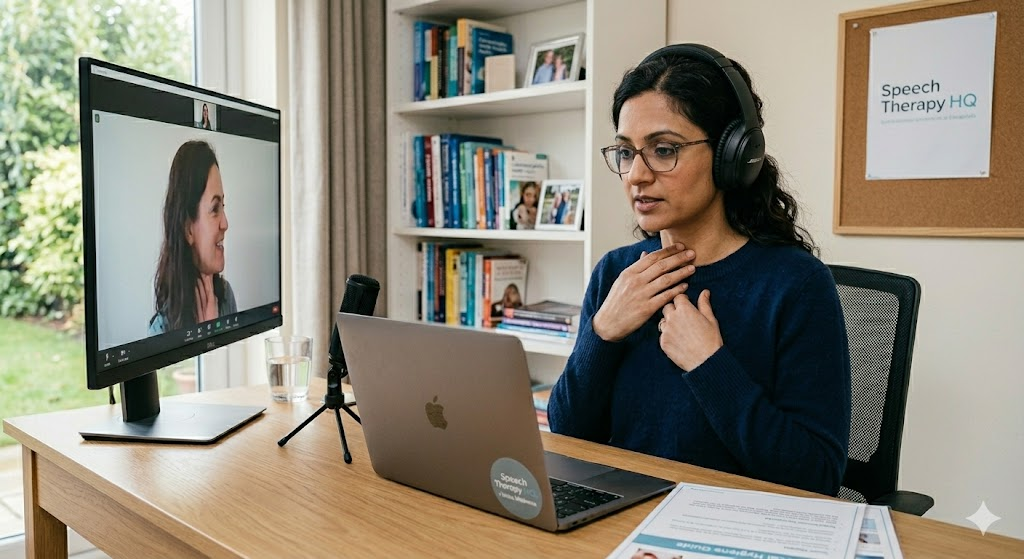
  • Provides home or online consultations if mobility is an issue
  • Offers personalised guidance for carers and family members
  • Can monitor progress and adapt strategies as dementia progresses

Specialist therapy ensures interventions are safe, practical, and tailored to your loved one’s needs.

FAQ's

Frequently Asked Questions About Aphasia Therapy

FAQ's

  • Q: Can swallowing difficulties in dementia improve?

    Yes. While dementia is progressive, strategies and therapy can improve safety, reduce choking risk, and enhance quality of life. Suitability for rehabilitation exercises varies, is dependent on the individual circumstances and is assessed by the treating therapist.


  • Q: Are texture-modified diets necessary?

    Not always, there are many factors that influence whether modified diet or fluids should be recommended. A specialist speech and language therapist can assess and work with clients and their families or carers to recommend safe textures for each individual, balancing nutrition, enjoyment and quality of life.

  • Q: Can therapy be done at home?

    Absolutely. Home-based therapy is often very effective for seniors with mobility or cognitive challenges. Online therapy can be an option, depending on the individual and their support system.

Taking Action: Protect Your Loved One Today


Swallowing difficulties in dementia can be worrying, but you don’t have to navigate it alone.


Private speech and language therapy provides:


  • Personalised swallowing assessment
  • Evidence-based strategies for safe eating
  • Guidance for families and carers
  • Ongoing support as dementia progresses

Even small improvements can reduce risk, improve nutrition, and make mealtimes calmer and safer.


Book a consultation today to get expert advice and support for your loved one.

Adult speech therapy for a stroke patient
March 5, 2026
A stroke, brain injury, Parkinson’s disease, multiple sclerosis, or other neurological condition can affect communication in different ways.

Remote online aphasia therapy
February 11, 2026
In this guide, we explain what aphasia is, how private aphasia therapy for adults works, and how specialist support can help rebuild communication and confidence after stroke.

Adult speech therpy, treating parkinsons
February 11, 2026
Parkinson’s disease affects more than movement, it often impacts speech, voice, and communication. Many adults notice changes such as softer voice, slurred speech, or difficulty being understood, which can affect independence, confidence, and social connection.

The Benefits of Private Online Speech Therapy
May 22, 2025
Discover the benefits of private online speech and language therapy for adults. Enjoy flexible, expert support via video sessions – improve your communication skills from the comfort of home. Book your remote therapy consultation today!