Staying Connected: Overcoming Communication Barriers in Later Life
Rebuilding the confidence to engage, share stories, and stay active in your community.
As we age, the ability to communicate clearly is often something we take for granted, until it begins to change. Whether it is the result of a stroke, the onset of a neurological condition like Parkinson’s, or simply finding it harder to follow conversations in a crowded room, communication difficulties can feel incredibly isolating.
Suddenly, the simple joy of a Sunday lunch with grandchildren or a chat with a neighbour becomes a source of anxiety. At
Speech Therapy HQ, we believe that your voice is your link to the world, and it is never too late to strengthen that connection. We focus on functional outcomes that help you stay "in the room" during the moments that matter most.
The Hidden Impact of Communication Struggles
Communication difficulties in later life aren't just about the words themselves; they impact your overall wellbeing and mental health. We often see clients and their families struggling with:
- Choosing to stay quiet rather than risk being misunderstood, which can lead to rapid social isolation and cognitive decline.
- Loss of identity that might feel like your wisdom, humour, and personality are "trapped" behind a voice that won't cooperate or a brain that struggles to find the right word.
- Many older adults are told their communication changes are just part of getting older. This is rarely the case. Targeted intervention can significantly improve quality of life at any age.
- The vital importance of being able to clearly communicate your needs, pain levels, preferences or being able to call for help.
How Functional Speech Therapy Helps
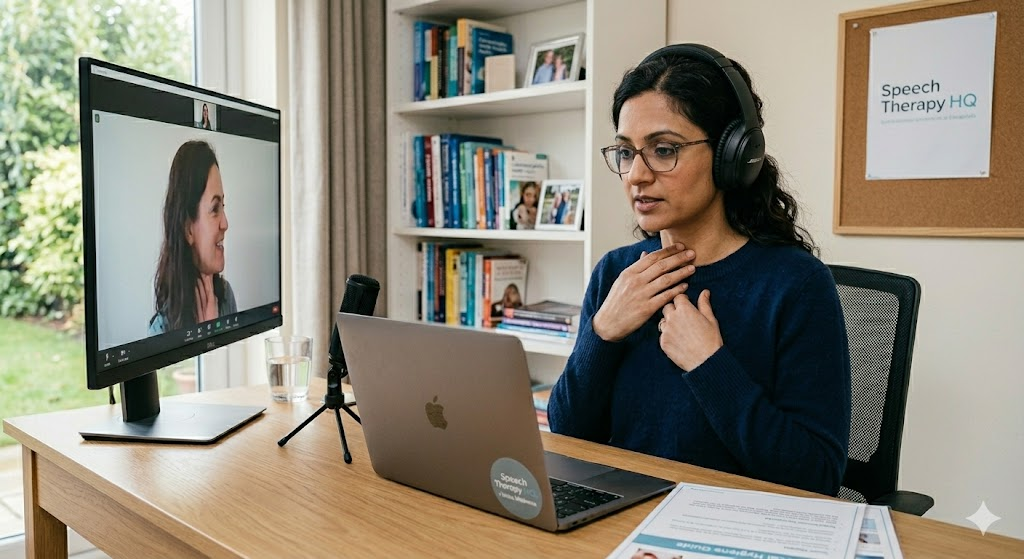
Our approach for older adults is practical and dignified. We focus on the real-world situations you face every day. Whether we are meeting in our Manchester clinic, via Telehealth, or during a home visit, our support includes:
- Voice strengthening:
Using evidence-based techniques to increase vocal volume and clarity. This is particularly effective for those with Parkinson’s who feel their voice has become too quiet to be heard.
- Aphasia & post-stroke recovery: Helping you find your words again through neuroplasticity exercises and communication aids that can bridge the gap when speech is difficult.
- Communication partner training: We don't just work with you; we work with your spouse, children, or carers. We teach them how to adapt their communication style to make conversations flow naturally again.
- Cognitive communication therapy: Developing tools to help with memory-related communication hurdles, ensuring you can stay on track during stories and conversations.
A Support System for the Whole Family
We understand that for adult children, watching a parent withdraw from conversation is deeply painful. You want to hear their stories and see them engage with their grandchildren. Our therapy provides a bridge, giving families the tools to move past the frustration of "I can't understand you" and back into the joy of connection.
We offer
specialised Telehealth sessions across the UK for those who prefer the comfort of their own armchair, face-to-face appointments in our Didsbury clinic, and
limited home visits within the Manchester area for those who find travel difficult.
Take the Next Step Toward Connection
You don’t have to accept a quieter life as an inevitability. Whether you are looking for support for yourself or for an elderly parent, we offer a gentle, professional, and highly effective approach to rebuilding communication. Let’s work together to ensure your voice remains heard.