Strategies for families and caregivers to build functional communication and reduce frustration
Caring for an adult with a learning disability or autism comes with a unique set of rewards and challenges.
As a parent, sibling, or professional carer, you know that communication is the foundation of everything, from making simple daily choices to building meaningful relationships.
However, when communication breaks down, it often leads to frustration, social withdrawal, or behaviours that might be worrying. At
Speech Therapy HQ, we believe that every adult has the right to be understood. Our mission is to work alongside you to find a "Total Communication" approach that reduces stress and increases independence.
Communication is More Than Just Speech
For many adults with complex needs, relying solely on spoken language can be overwhelming. We advocate for a
Total Communication environment, which uses every available tool to help a person express themselves. This includes:
- Visual Supports: Using symbols, photographs, or "Now and Next" boards to provide a predictable structure to the day.
- AAC (Augmented and Alternative Communication): From simple picture exchange systems to high-tech speech-generating apps on tablets.
- Sign and Gesture: Using formal systems like Makaton or personal gestures to bridge the gap between thought and expression.
- Environmental Adjustments: Reducing sensory "noise" so that the individual has the mental space to process information.
The Caregiver as a Communication Partner
You are the expert on the person you support. You know their likes, their dislikes, and their subtle ‘tells’. Our role is to provide you with the clinical tools to enhance that connection.
In our sessions, we don’t just work with the individual. We provide Caregiver Coaching, helping you to:
- Adjust your input: Learning to use shorter sentences and allowing more "processing time" (often up to 10 seconds) for the adult to respond.
- Identify hidden communication: Recognising that a change in posture or a specific sound might actually be a request or a refusal.
- Build more independence in daily life: Finding opportunities throughout the day where the person can make their own choices, rather than having choices made for them.
Why Focus on Communication in Adulthood?
It is a common misconception that communication development stops after childhood. In reality, the transition into adulthood requires new communication skills that the person may not have needed until now. This might be due to moving into supported living, starting a day programme, making and maintaining new friendships or relationships, or managing and understanding new healthcare needs.
By investing in speech and language therapy now, you are helping the person you care for to:
- Express physical pain or discomfort.
- Advocate for their own boundaries.
- Engage more deeply with their community and build relationships with others
- Experience a higher quality of life with less emotional distress.
How We Can Help
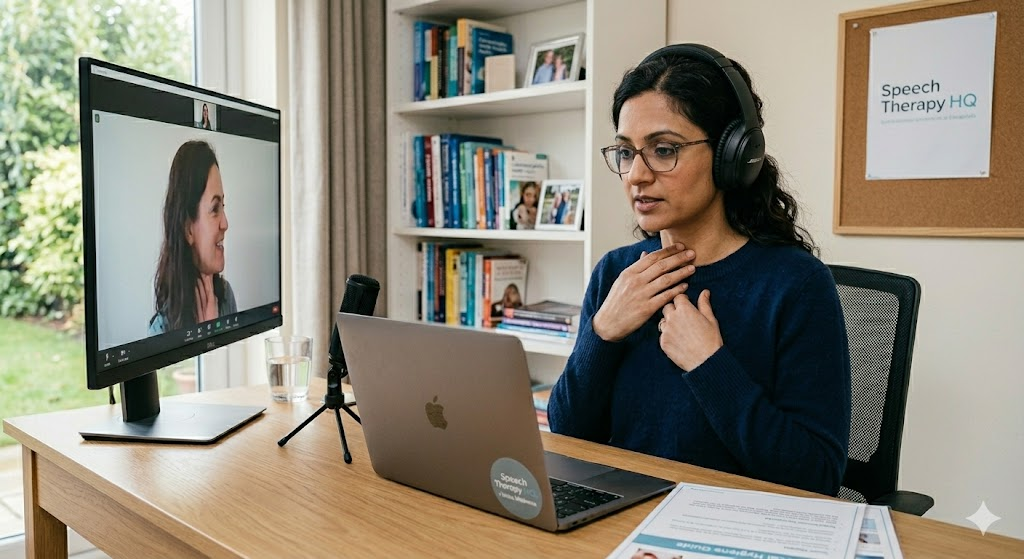
At Speech Therapy HQ, we offer a flexible and holistic service tailored to your specific situation. Whether you prefer a home visit in the Manchester area to see the individual in their natural environment, or a Telehealth consultation to discuss strategies and training for your care team, we are here to support you.